As last week’s referendum results slowly trickled in, most Albertans breathed a sigh of relief. The numbers on the dreaded question 10 were clear — a sound trouncing of separatist sentiment. The narrow passage of five of the nine other questions left a niggling unease, but the dominant sentiment in the first few post-vote days was relief. But while that relief is real and justified, it elides a longer-lasting concern: that despite the lopsided vote, the referendum has cracked open fault lines among Albertans.
Those fault lines can be seen no more clearly than in the duelling campaign signs strewn on lawns, boulevards, and highway shoulders across the province. While they will slowly be picked up and stored, the story they tell about two Albertas will not be tucked away with the coroplast.
Two competing visions for Alberta emerge in duelling campaign colours: maple-leaf red for Option 1 supporters and Alberta-flag blue for separatists. The flags themselves have become placeholders for opinions on where Alberta should go. They exhort Albertans to vote for very different futures — and they deploy the most highly recognizable, deeply emotive, and heavily loaded political symbols to do so.
The flags and symbols of political affiliation convey coded messages about political meaning, belonging, ownership, and shared values to neighbours and passersby alike. In a stark example, in the riding of Rimbey-Rocky Mountain House-Sundre — one of only two ridings where Option 2 secured a narrow majority — the Alberta flag sat alongside signs demanding “Let Alberta Decide!”, “Send Ottawa A Message - choose option 2”, and “This is our Alberta” (emphasis added). A sign bordered by red bars and a maple leaf might have been mistaken for federalist support from a distance; up close, it read “We [heart] truckers.”
It has never been clearer that these symbols serve not merely to advertise, persuade, or even mark out territory but to stand in for particular — and highly contested — understandings of who Albertans are, and mutually exclusive visions of Alberta’s future.
In recent weeks, as the vote drew near, coverage from various media platforms seemed surprised and a little perplexed that seemingly superficial things such as flags should become strident markers of political and social division. These commentators, perhaps, were raised on the belief — as many of us were — that our symbols were unproblematic. Neutral at worst, universally beloved at best. Perhaps they remember the international cachet of the Maple Leaf post-9/11, in the early days of the intervention in Afghanistan, the second Gulf War, and the carving up of the world into “with us” or “with the axis of evil”. Perhaps they’ve forgotten the astonishing momentum of the Idle No More movement, the visceral impact of the Canadian flag flown upside-down and in defiance of its colonialist structures. Or further back but tidily relevant: a heated debate in the House of Commons to decide whether Canadian MPs in the Canadian Parliament could or should keep Canadian flags on their benches over the objections of Quebec separatists.
When, at the height of the Covid-19 pandemic, a convoy occupied the streets of Ottawa and camped out at the Alberta-USA border (an international border), the movement’s association with the Canadian flag felt to many like a deeply unsettling appropriation. Having failed to entirely or permanently overwrite the meaning of the national flag in the aftermath, many of those same agitators have transposed their vision of a faux-libertarian nation onto the blue field of the Alberta flag. They have succeeded, in the most observable ways, in erasing those flags and symbols that disturb or unsettle their version of Alberta from public spaces — Alberta means blue skies, but no rainbows. Symbolism is never static or one-sided — and it is certainly never universally unchallenged. And yet, in the hours and days that followed the devastating losses at CFB Wainwright, the symbolism of the national and provincial flags being flown at half-mast was missed by no one.
With the wider geopolitical context and looming existential threat to Canada’s sovereignty implied directly by US President Donald Trump and applied covertly via Russian cyber incursions, Albertans and their fellow Canadians could be forgiven for asking, “So what? The votes are in, Canada remains united, the flags will come down, Alberta will move on to the real business of everyday governing.” Not so fast. This referendum may have felt like a life-size performance of political theatre, but it was a symbolic vote with very real consequences.
Days before the referendum, Prime Minister Mark Carney arrived in Alberta to shore up support for the Canadian project and promote his vision of “Building Canada Strong” in collaboration with Albertans. His pitch: “We can’t achieve any of this [pipelines and projects] if we’re divided. You can’t build big things on fault lines.” However, the future of Alberta is still deeply contested, and the divisions that became magnified during this campaign go far beyond "separatist" vs. “federalist”, or “Alberta” and “Ottawa.” The most troubling ‘fault lines’ are the ones now inscribed between Albertans in response to the other nine questions.
Deserving vs. undeserving
A slim majority of Albertans endorsed a vision of our province where some working and living in Alberta are deserving of access to health care, education and government services and others are not, simply due to the type of immigration paper they possess. Opposition leader Pierre Poilievre indicated that “following this referendum the goal is to unify, and doing so means addressing concerns of affordability, safety, and immigration.” But whose affordability and safety was he referring to? And who would be excluded from that unity? Prime Minister Mark Carney appeared to quickly endorse this divisive direction, stating “we can accomplish that without constitutional change.”
A larger majority of voters favoured the proposal to require proof of citizenship to vote in provincial elections, which will demarcate some citizens as ‘deserving’ of participating in the democratic process, and others as ‘undeserving.’ Citizens who have difficulty obtaining or replacing passports, birth certificates, or citizenship cards would thus be prohibited from voting. This could include seniors, those without stable housing, students, rural and Indigenous voters, and those whose name or gender marker does not match their identification documents.
Togetherness vs. division
Approval of the four questions concerning immigration and access to public services reflects a willingness to accept racist narratives that blame newcomers for problems in our health care and education systems, providing a convenient distraction from the fact that crowded classrooms and over-full emergency rooms are a consequence of years of underfunding, not runaway immigration. As Edmonton Mayor Andrew Knack put it in an interview with CBC’s As It Happens, “Those questions were designed to other our neighbours, I don't believe that our neighbours accessing health care or accessing education are what's creating challenges. It's the investment in those services.”
Members of immigrant communities are already vocalizing anxiety over potential loss of access to services, and many are also expressing a deep sense of hurt, exclusion, and relegation to second- or third-class citizens. This stands in stark contrast not only to the contribution they have made to the province, but more fundamentally, to the promises Alberta claimed to be built on.
Indigenous treaty rights vs. so-called sovereignty
The fact that Indigenous peoples played a key role in challenging the myths of Alberta separation, through legal challenges and record-high voter turnout to vote in favour of remaining in Canada, is noteworthy. Their mobilization to remain “in” a colonial national construct speaks to how treaty rights and Indigenous peoples themselves are perceived as nothing more than a frustrating impediment to the separatist project and puts the lie to the notion of a “sovereign” Alberta in a “united” Canada. The grievances of Indigenous peoples run far deeper than the puffed-up outrages of Alberta’s aggrieved class — and First Nations leaders are making clear to Smith that fragile trust has been broken and will not be swiftly mended.
The 1% vs. the rest
In her recent report Scapegoating and Separatists: Why Immigration is on the Ballot in October, Dr. Bronwyn Bragg articulates how the power of a narrative of scarcity can be used to direct voters' fear toward politically advantageous targets:
Albertans regularly interact with a provincial service landscape characterized by scarcity. The message that there are too many people is compelling because Albertans are in an environment with too few services, including in health care, education, and social services.
By entertaining the prospect of charging fees to tax-paying temporary migrant workers, international students, and refugee claimants for access to health care and education (or prohibiting access entirely), Albertans have endorsed a policy direction that repudiates equitable access to essential services and permits further degradation of the concept of equity and equality. Once again, by turning our attention to those in need of services, our eyes are turned away from policy options that could increase equity in Alberta, such as progressive income taxes, a wealth tax and royalty rates that reflect the true value of our resources — especially as the UCP government boasted of its “fifth consecutive” budget surplus just days before the referendum.
Urban vs. rural
It is not lost on us that Alberta’s cities voted overwhelmingly for Canada, with vote totals in urban ridings consistently topping 80% and occasionally 90%. Meanwhile, the totals were much tighter in rural ridings, with only two narrowly favouring Option 2 (Central Peace-Notley and Rimbey-Rocky Mountain House-Sundre). Residents with the least direct experience of newcomers (who generally move to urban areas) expressed the greatest aversion to them. Rather than joining in common cause to call for fixes to the rural health care crisis and stem the bleeding of jobs and property tax revenue, we have carved yet another divide between urban and rural Albertans. This is a divide that can and will be exploited by the purveyors of separatist fantasies and their fellow travellers on the right to paint other Albertans as “others” not to be trusted or looked to for solidarity and thus perpetuate decades of shallow rural boosterism while doing nothing to solve the real and pressing concerns of rural residents.
Before the official results have even been declared, Smith has claimed a mandate to pursue the proposals set out in questions 1 to 9 — despite voters rejecting four of the nine policy questions and approving several others by razor-thin margins. If Alberta has “chosen unity” as both Smith and Carney have boasted as the votes were tallied, then why is the premier celebrating fracture and exclusion?
And never mind that voters rejected all four proposals for constitutional change — or that the constitutionality of the questions themselves is highly questionable. This will not stop Premier Smith and the UCP from continuing their crusade for “Quebecification” of Alberta’s place in Confederation or engineering their own version of the infamous “Alberta Firewall”. For the clarion call of greater autonomy for Alberta serves a more crucial role than addressing so-called grievances. It is a tool to reconstruct Alberta’s socio-political matrix to advantage those who benefit from the fault lines, those who gain their economic comfort from taking from others. In this, at least, it will be seen as a resounding victory for those whose geopolitical interests are bolstered by fomenting tension anywhere outside their own borders.
Political communities — countries and provinces alike — function on the belief that flags are unifiers. We “rally around the flag”. Olympians drape themselves in them to connote that their victory is for all of us. Yet, today in Alberta, our flags have become symbols for the enduring divisions in our province. In her televised response to the referendum results, Premier Smith was framed by three Alberta and two Canada flags, suggesting they are, once again, together. But it will not be easy for us to rejoin those symbols into a unified Alberta as long as her government continues to use fault lines to shore up its political power.
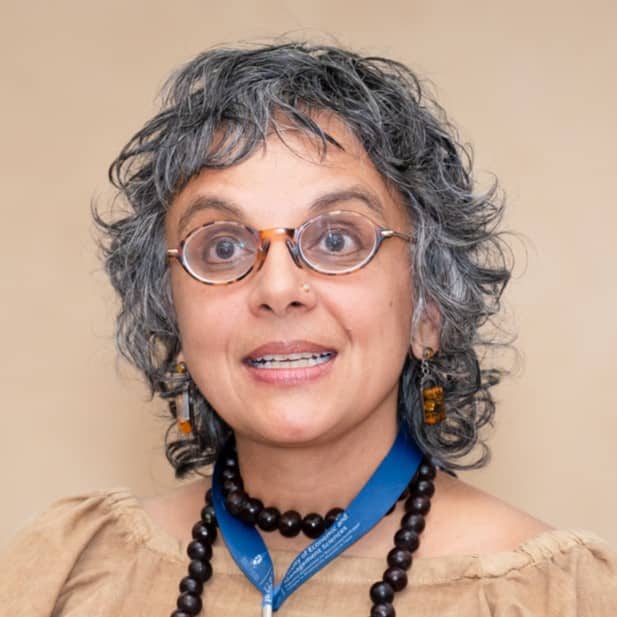
Salimah Valiani
Salimah Valiani is a researcher of world historical political economy and research manager at the Parkland Institute. She has a PhD in sociology from Carleton University and is the author of the research monographs “The Africa Care Economy Index” (FEMNET and UNDP, 2022) and “Rethinking Unequal Exchange: The Global Integration of Nursing Labour Markets” (University of Toronto Press, 2012). She's also the editor of “The Future of Mining in South Africa: Sunset or Sunrise?” (Mapungubwe Institute for Strategic Research, 2018). Salimah has published several journal articles, policy papers, and media articles on health, development, feminist economics, and labour. She has served in unions, non-governmental organizations, and think-tanks in Canada, South Africa, and globally. She was awarded the Feminist Economics Rhonda Williams Prize in 2012, an award recognizing feminist scholarship and activism in the spirit of the African-American economist and advocate, Rhonda Williams. Salimah is also a published poet. Her 2021 collection, “29 leads to love” (Inanna Publications), was the 2022 winner of the International Book Award for Contemporary Poetry.

Jason Foster
Jason Foster is the director of Parkland Institute and a professor of human resources and labour relations at Athabasca University. Jason is the author of Gigs, Hustles, & Temps (2023) and Defying Expectations: The Case of UFCW Local 401 (2018), as well as co-author of Health and Safety in Canadian Workplaces (2016). His research interests include workplace injury, union renewal, labour and employment policy, and migrant workers in Canada. He is committed to sharing research to as broad an audience as possible, so that it might contribute to policy change and making people’s lives better.

Rebecca Graff-McRae
Rebecca Graff-McRae is research manager for Parkland Institute, where her areas of research include public health care, seniors’ care, and public services. She holds a PhD in Irish Politics from Queen’s University Belfast, and has previously held fellowships with the Institute of Irish Studies at Queen’s, Memorial University Newfoundland, and University College Cork. In addition to many reports for Parkland Institute, she has contributed to the Canadian Centre for Policy Alternatives’ Alternative Federal Budget since 2022 and her work has been featured in local, provincial, national, and international news outlets.
Related reading
Get timely research and analysis from Parkland in your inbox.
Subscribe to email from ParklandYour donation supports research for the common good.
Donate to Parkland Institute